Blog Details


A freight broker can lose margin without booking a bad load. Ten minutes chasing a POD, another fifteen updating the TMS, and several calls checking a driver’s location may look harmless. Across dozens of weekly loads, those minutes become full working days.

For this example, we will use a brokerage moving 40 loads per week. We will value administrative time at $35 per hour for an operations employee and $75 per hour for an owner-broker whose time could be used for sales and customer relationships.
A dedicated FreightBridge BPO back-office seat costs $2,000 per month, or approximately $11.54 per hour. The comparison below shows how quickly nine routine freight broker admin tasks can exceed that monthly price.
How Tracking, TMS Updates, and POD Chasing Reduce Margin

These daily tasks may look small, but together they can consume hours of broker time before the load is fully closed.
1. Routine tracking and check calls: At eight minutes per load, tracking 40 loads requires approximately 5.3 hours per week.
2. TMS data entry: Building loads, entering driver information, updating milestones, and attaching documents can take another four hours per week.
3. Chasing PODs and delivery paperwork: At five minutes per load, collecting and checking PODs, BOLs, and receipts adds approximately 3.3 hours per week.
Together, these first three tasks require about 12.6 hours per week.
That equals approximately:
- $1,909 per month at $35 per hour
- $4,092 per month at $75 per hour
The administrative cost has already passed FreightBridge’s $2,000 monthly seat price when the work is handled by an experienced broker. Missing documents can also delay invoicing, making the real cost larger than the labor calculation alone.
How Carrier Setup, Appointments, and Rate Confirmations Add Hidden Cost
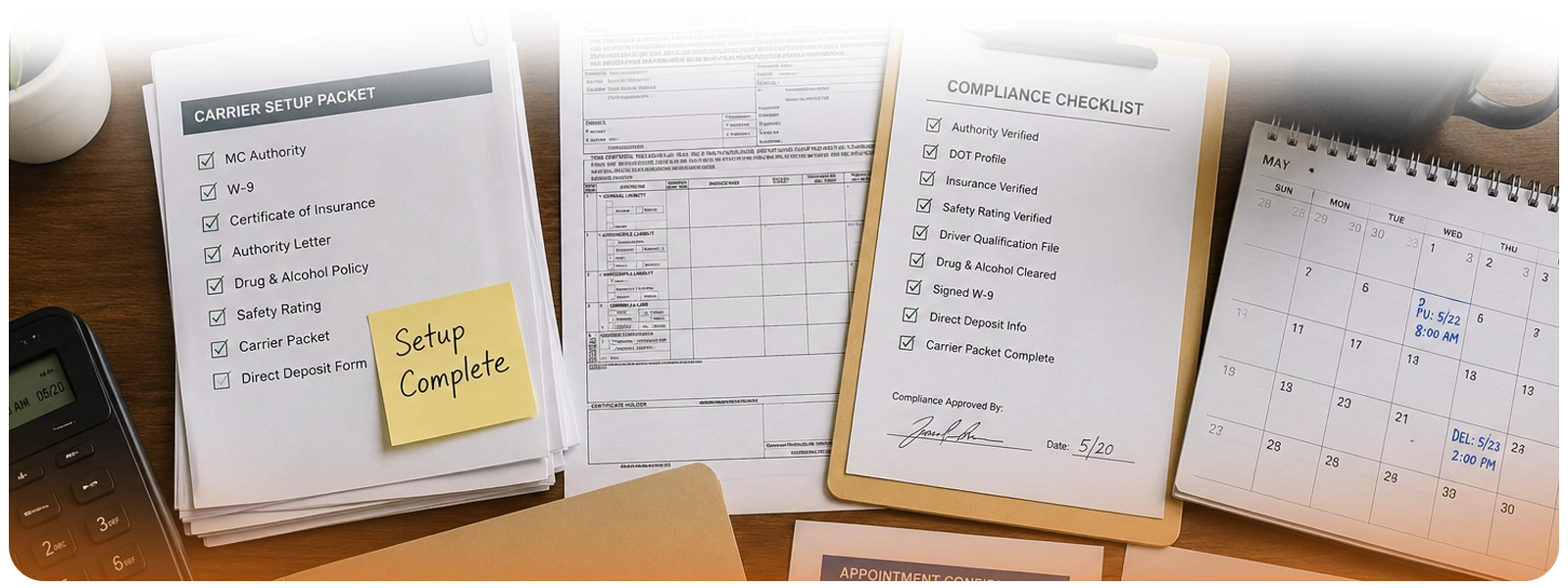
Carrier setup, appointment scheduling, and rate confirmations keep loads moving, but they also take time away from higher-value broker work.
4. Carrier setup and compliance checks: Setting up ten carriers per week at twelve minutes each requires approximately two hours.
5. Appointment scheduling and rescheduling: Calling facilities, confirming times, and updating drivers can add approximately 3.3 hours per week.
6. Rate confirmation preparation: Reviewing details, sending confirmations, correcting mistakes, and chasing signatures can consume another 2.7 hours per week.
These three tasks add approximately eight weekly hours to the workload.
The estimated monthly cost is:
- $1,212 at $35 per hour
- $2,598 at $75 per hour
Combined with the first three tasks, the brokerage is now spending about 20.6 hours per week on routine administration. The running monthly cost reaches approximately $3,121 at the lower hourly value and $6,690 at the owner-broker value.
Most of this work is important, but it does not require the person responsible for pricing, sales, and customer strategy.
How Accessorials, Billing, and Customer Updates Consume Broker Time
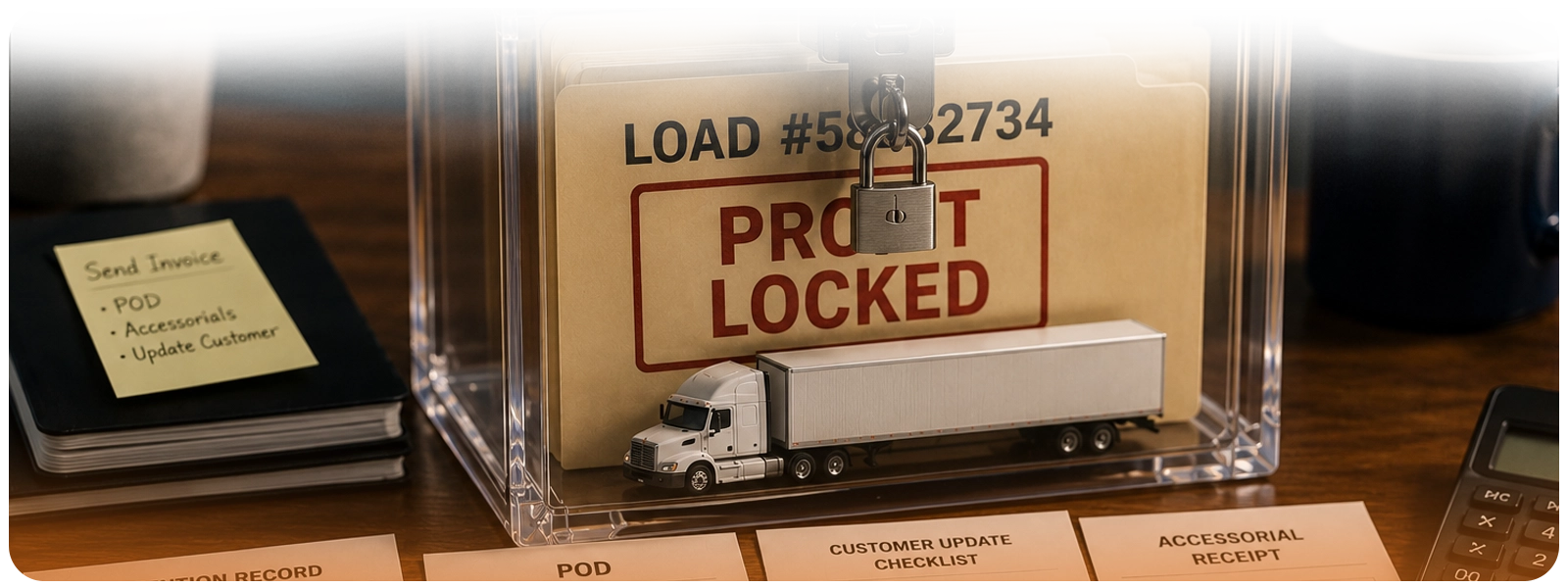
The final stages of a load can create just as much administrative work as booking and tracking it.
7. Accessorial documentation: Collecting detention times, lumper receipts, and approval records may require approximately two hours per week.
8. Billing preparation: Matching documents, creating invoices, and correcting rejected submissions can add four hours per week.
9. Routine customer updates: Formatting and sending pickup, transit, delay, and delivery updates requires approximately 3.3 hours per week.
These final tasks add 9.3 hours, bringing the total to nearly 30 weekly admin hours.
The $2,000 break-even point equals approximately 13.2 weekly hours at $35 per hour or only 6.2 weekly hours at $75 per hour. A brokerage moving 40 loads can cross that threshold through tracking and TMS updates alone.
When Freight Brokerage Back-Office Support Pays Off
Back-office work does not disappear because it is repetitive. Every check call, TMS update, missing POD, appointment request, and billing correction still consumes time and affects margin.
In this example, nine common tasks require almost 30 hours per week. Their estimated monthly cost ranges from $4,229 to $9,722, depending on who performs the work.
A dedicated FreightBridge BPO back-office seat costs $2,000 per month and supports these repeatable processes from a supervised office environment.
Before adding another employee or continuing to absorb the workload yourself, track your team’s administrative hours for two weeks. If routine tasks consistently exceed six to thirteen hours per week, depending on the value of that time, your brokerage may already be spending more than the cost of dedicated support.
Learn more about our Freight Brokerage Operations service and compare your current workload with the $2,000 monthly seat.