Dispatching & Load Closing

Freight Dispatch & Load Closing Outsourcing
Dedicated in-office dispatch teams for freight brokers, forwarders, and carriers - from pickup coordination and appointment scheduling through tracking, exception management, delivery confirmation, and final load closeout.
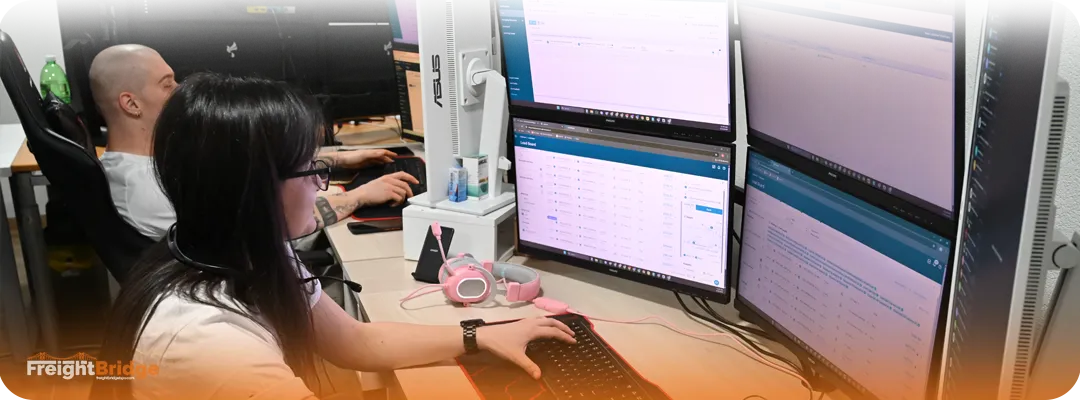
Dedicated Dispatch Support Inside Your Systems

From Load Assignment to Billing-Ready Close
Dispatching involves continuous coordination from load assignment through delivery and closeout. Our in-office team supports the daily execution of active freight, including:
- Load planning and driver scheduling
- Route and capacity coordination
- Carrier and driver communication
- Appointment setting and rescheduling
- Track & Trace, ETA monitoring and shipment updates
- OS&D issue resolution and detention management
- Load closing support and freight paperwork follow-up
- Intermodal, drayage, expedited, and specialized freight coordination
Our team manages these operational tasks so your internal staff can focus on customers, capacity, and higher-value decisions.
Roles We Support in Dispatch & Load Coordination
We build dispatch support around your freight mix, operating hours, and workflow requirements, including:
- Load Planners and Capacity Coordinators
- Track & Trace Coordinators
- Operations Coordinators
- LTL/FTL Dispatch Specialists
- Drayage & Intermodal Dispatchers
- Freight Recovery Coordinators
- Specialized Freight Coordinators (HAZMAT, Reefer, Oversize)
- After-Hours and Weekend Dispatch Support
Each role is trained in U.S. freight operations, client systems, SOPs, and platform workflows to provide consistent dispatch support across required shifts.
Why Dedicated Dispatch Support Matters
Managing dispatch in-house requires recruiting, training, supervision, and backup coverage. FreightBridge BPO provides dedicated in-office dispatch support that works inside your existing systems and workflows. Our team can handle load coordination, tracking, carrier and driver communication, documentation, and load closing across the shifts you need.
Extend Your Dispatch Operations Team
FreightBridge BPO provides dedicated, in-office dispatch and load closing support for freight brokers, forwarders and carriers. Add day, after-hours, weekend or 24/7 coverage for dispatch, Track & Trace, carrier communication, exception management and billing-ready load closeout while keeping your existing systems and workflows in place.
What does an outsourced freight dispatcher handle?
An outsourced freight dispatcher can support load setup, driver and carrier communication, appointment coordination, Track & Trace, ETA monitoring, exception management, delivery confirmation, POD/BOL follow-up and load closing. FreightBridge BPO provides this support through dedicated, in-office teams working inside the client’s existing systems and SOPs.
Can FreightBridge BPO work inside our TMS and existing systems?
Yes. FreightBridge BPO teams can work inside the client’s existing TMS, CRM, load boards, email, communication tools and SOPs. The team follows the client’s workflows, access rules, escalation procedures and reporting requirements so outsourced support fits into the existing operation rather than creating a separate process.