Blog Details

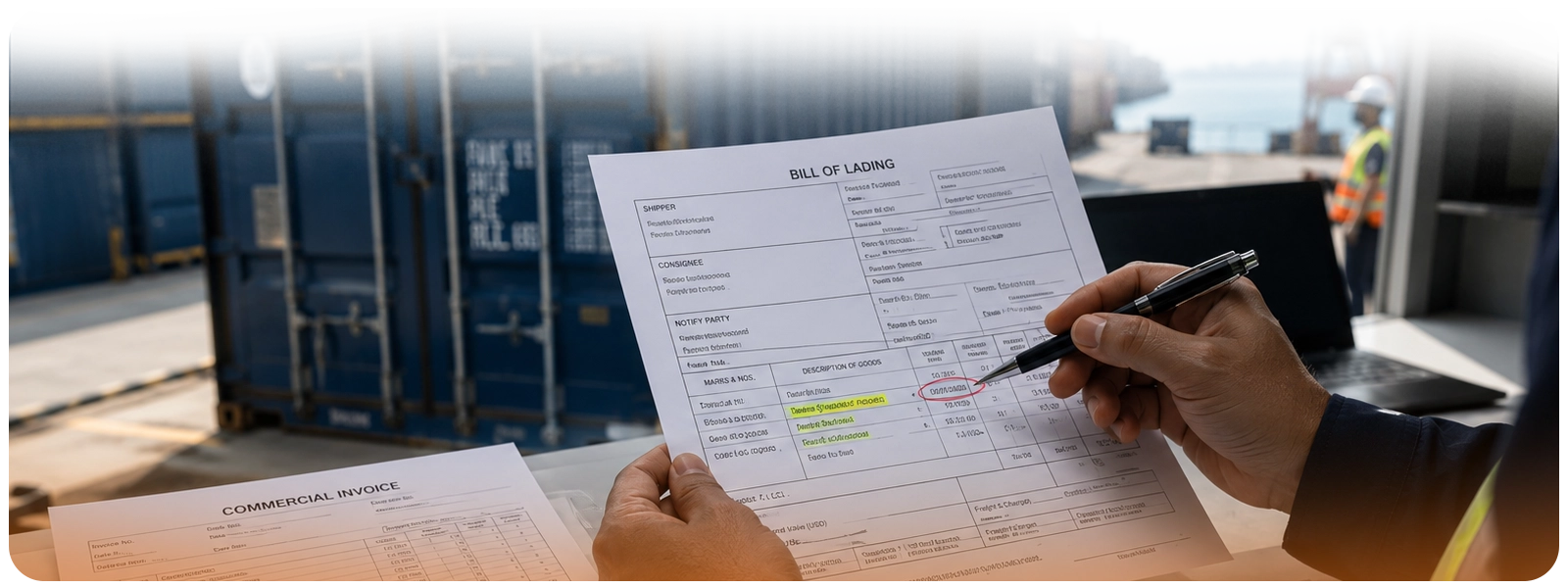
A Bill of Lading records key shipment details, including the shipper, consignee, cargo, weight, packaging, and route. Even small differences between the Bill of Lading, commercial invoice, packing list, and customs filing can cause reviews, amendments, inspections, or delayed release.

Common problems include mismatched consignee details, vague cargo descriptions, and incorrect weights. Freight forwarders reduce these risks by checking every document before the final Bill of Lading and customs data are submitted.
The Bill of Lading Errors Most Likely to Delay Customs

The most common problems involve information customs authorities use to identify the shipment.
1. Consignee or shipper mismatches: Legal names, addresses, importer details, or contact information do not match the commercial invoice or customs declaration.
2. Vague cargo descriptions: General descriptions such as “parts,” “samples,” or “general merchandise” may not provide enough information to identify the goods. CBP requires precise commodity descriptions that clearly explain what the cargo is.
3. Weight or package discrepancies: Gross weight, carton count, pallet quantity, or dimensions differ from the packing list or carrier records.
4. Incorrect routing information: The port of loading, port of discharge, final destination, or place of delivery is entered incorrectly.
5. Missing container or seal numbers: The Bill of Lading does not match the physical container records.
6. Incorrect freight or payment terms: Prepaid, collect, payer, or delivery terms differ from the booking or commercial documents.
Not every error automatically causes a hold, but inaccurate data increases the likelihood of review, rejection, or amendment.
Why Small Documentation Errors Become Expensive

Advance customs systems rely on accurate shipment data before the cargo arrives—and sometimes before it is loaded.
For EU imports, an Entry Summary Declaration provides advance cargo information for customs security analysis. Containerized maritime filings may be required at least 24 hours before loading at the foreign port. Incomplete or inaccurate data can lead to rejected declarations or requests for corrected information, creating delays in the entry process.
Once shipping instructions or manifest information have been submitted, a correction may require:
- A revised Bill of Lading
- A manifest amendment
- Updated customs filings
- Additional carrier review
- New document approval
- Communication with the shipper, consignee, carrier, and customs representative
Carriers may also charge amendment, manual-documentation, or late-documentation fees. For example, Maersk publishes separate charges for transport-document amendments and late documentation in certain markets.
The largest cost may still be the delay itself. Cargo waiting for corrected documents can create storage, demurrage, missed appointments, customer complaints, and additional coordination work.
How Freight Forwarders Prevent Bill of Lading Errors
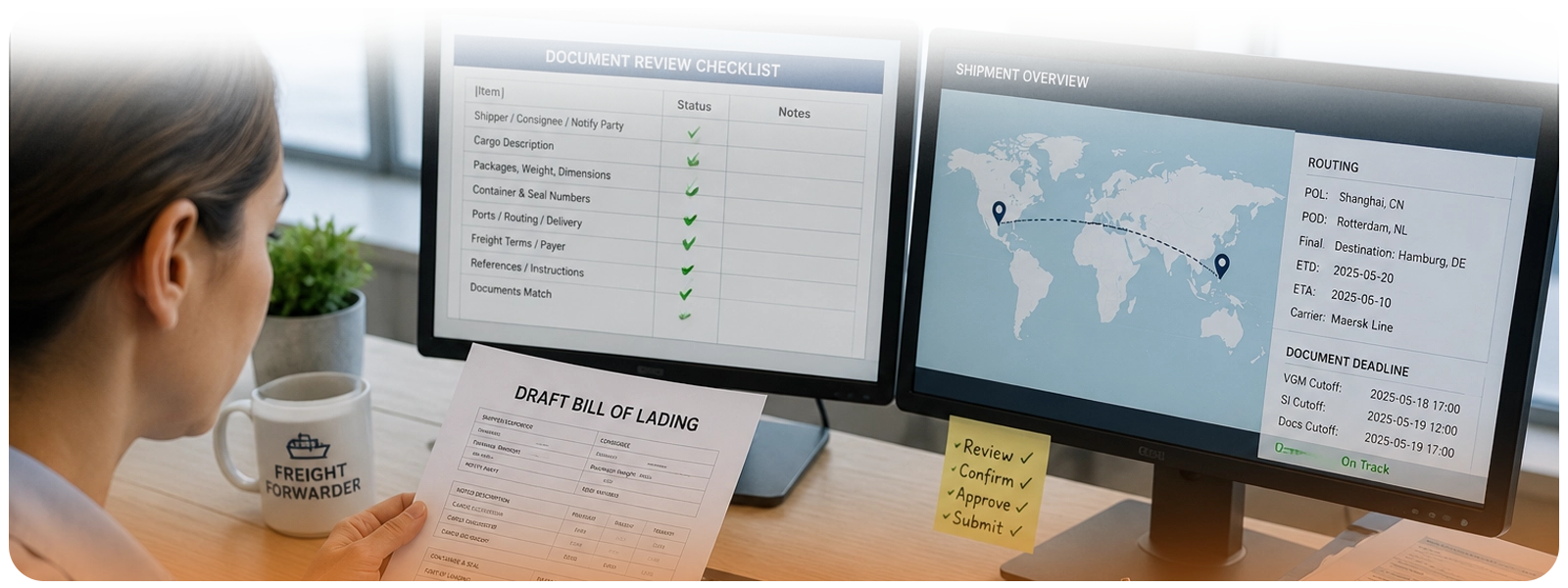
A reliable prevention process begins before the final Bill of Lading is issued.
The forwarder should compare the draft Bill of Lading with the booking instructions, commercial invoice, packing list, and customs data. The review should confirm:
- Shipper, consignee, and notify-party details
- Cargo description and commodity information
- Package count, weight, and dimensions
- Container and seal numbers
- Ports, routing, and delivery locations
- Freight terms and payer information
- References required by the customer or customs representative
The cargo description should be specific and consistent across documents. Weight and cargo details should come from confirmed shipment records rather than estimates.
The draft should then be sent to the responsible parties for approval before the carrier’s documentation deadline. Changes should be logged so the team knows which version is final.
Carriers such as Maersk allow customers to amend cargo descriptions and weight information, but correcting errors before final submission reduces the risk of fees and downstream customs changes.
For higher shipment volumes, a documented checklist and second-person review can prevent the same mistakes from repeating.
Better Documentation Prevents Avoidable Customs Delays
Bill of Lading errors are rarely limited to one document. A mismatch can affect the carrier manifest, customs declaration, commercial paperwork, cargo release, and final delivery plan.
The most preventable problems are also the most common: incorrect party details, vague cargo descriptions, weight differences, routing mistakes, and late amendments.
Freight forwarders reduce these risks by centralizing documentation, matching every shipment record, reviewing the draft before submission, and maintaining clear approval procedures.
FreightBridge BPO supports freight forwarders with booking administration, document preparation, shipment-data validation, arrival notices, invoicing, and other repeatable back-office processes.