Blog Details


Customers do not need a message every hour when nothing has changed. They need accurate updates at the moments that matter.
A good freight broker customer update should explain where the load is, whether it remains on schedule, and when the customer will hear from you again. The right frequency depends on the shipment stage, transit length, customer agreement, and level of risk.

The best approach combines milestone-based updates for routine loads with immediate communication whenever a delay or exception appears.
The Update Schedule Customers Need at Each Load Stage
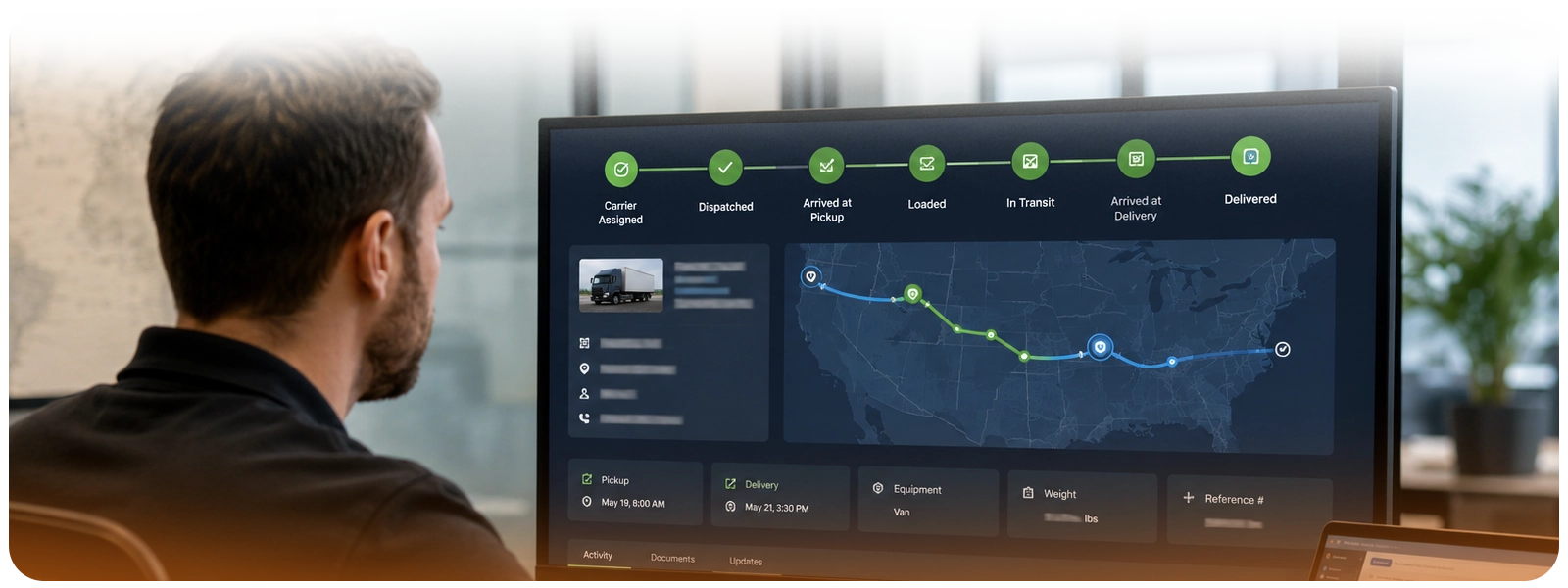
A standard update schedule should follow the shipment from dispatch through delivery.
Carrier assigned: Confirm the carrier, equipment type, pickup appointment, and tracking status when the customer requires this information.
Before pickup: Verify that the driver is dispatched and expected to arrive on time.
Arrived at pickup: Notify the customer when the driver checks in, especially when detention may become an issue.
Loaded and departed: Confirm the pickup time, departure time, current ETA, and any difference from the original plan.
In transit: For a same-day load, one meaningful transit update may be enough. For multi-day freight, a morning and afternoon update is a practical starting point.
Arrived at delivery: Confirm that the driver has checked in and note any unloading delay.
Delivered: Send the delivery time, exception details, and POD status promptly.
Each update should answer three questions: Where is the load? Is it still on schedule? When is the next update?
When Delays and High-Risk Loads Require More Communication
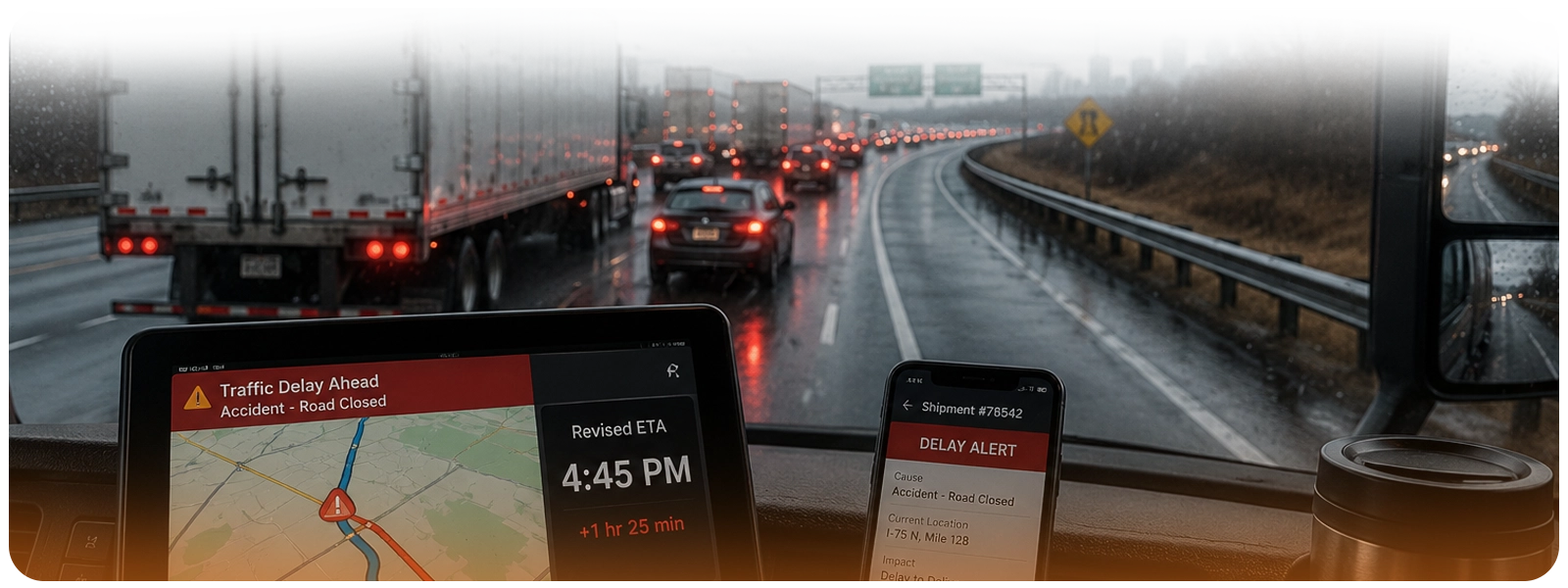
Exceptions should never follow the routine schedule. When a delay appears, communicate before the customer has to ask.
The first delay update should include:
- What happened
- The driver’s current location
- The expected effect on pickup or delivery
- What the team is doing
- The revised ETA, when available
- The time of the next update
Do not wait until the problem is fully resolved. When information is still limited, send a holding update and promise a specific follow-up time.
More frequent monitoring may also be needed for refrigerated freight, high-value cargo, expedited shipments, tight appointments, new carriers, and loads governed by strict customer service agreements.
For these shipments, the update schedule should be agreed upon before pickup. A reefer customer may require location and temperature checks at defined intervals, while a routine dry-van customer may only need pickup, transit, and delivery milestones.
The goal is not to send the most messages. It is to prevent surprises.
How to Standardize Updates Without Adding More Admin Work

Consistency becomes difficult when every broker handles updates differently. A written customer-communication process helps the team provide reliable information without creating unnecessary work.
For each account, document:
- Preferred communication channel
- Required shipment milestones
- Standard in-transit frequency
- Delay and escalation thresholds
- Customer-specific reporting format
- Person or shift responsible for each update
Templates can reduce repetitive writing. Create separate formats for dispatched, arrived, loaded, in transit, delayed, delivered, and POD-pending updates.
Routine visibility can also be supported through tracking links, customer portals, TMS milestones, and automated notifications. These tools are most useful for normal shipment progress.
Human communication should remain central when an ETA changes, tracking stops, a temperature issue appears, or an appointment is at risk.
Shift handoffs also matter. The incoming team should receive the current location, ETA, open issue, last customer update, and promised follow-up time. Without that information, the load may continue moving while customer communication stops.
Consistent Freight Broker Customer Updates Build Trust
There is no single update frequency that fits every freight load.
Routine shipments should receive updates at meaningful milestones. Multi-day loads may need morning and afternoon communication. Delays should be reported immediately, followed by updates at the times promised to the customer.
The strongest update process combines clear account expectations, reusable templates, tracking technology, defined escalation rules, and reliable shift ownership.
Customers are usually more understanding of a delay when they hear about it early and know what happens next. What damages trust is silence, inconsistent information, or an update that arrives only after the customer asks where the load is.
FreightBridge BPO supports freight brokerages with tracking, customer updates, TMS administration, exception communication.