Practical Track & Trace SOP for freight brokers covering pickup confirmation, ETA monitoring, shipment updates, exception escalation, delivery confirmation and POD follow-up.
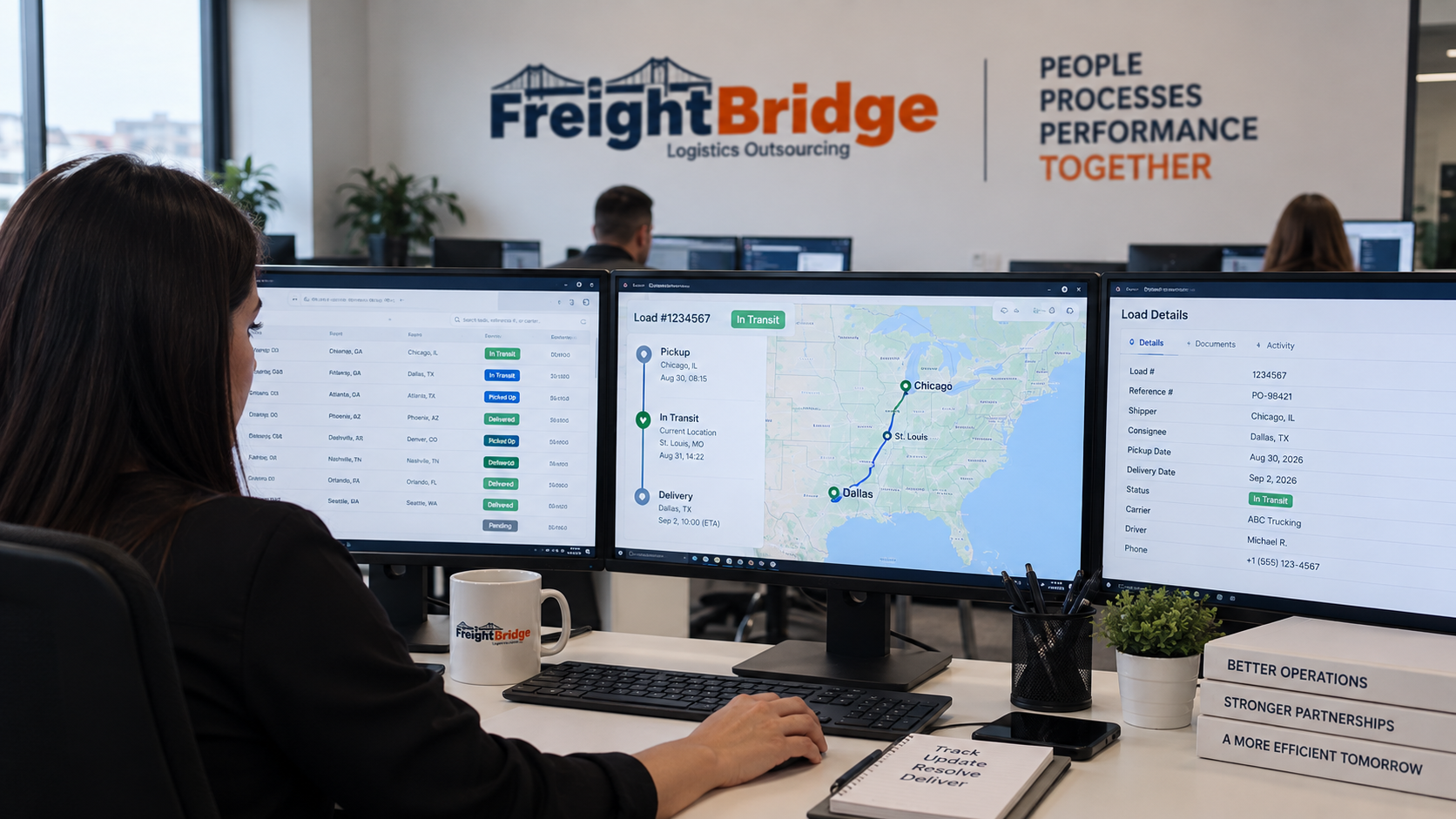
This SOP outlines a practical workflow for monitoring active freight from pickup through delivery and final document follow-up.
1. Pickup Confirmation
Confirm the carrier and driver are assigned, verify pickup appointment details, and check that the driver is on schedule. Record any delay or exception in the client’s TMS or communication system.
2. Driver & Carrier Check Calls
Maintain regular communication with the driver or carrier according to the client’s required check-call frequency. Confirm current location, ETA, load status and any operational issues.
3. ETA Monitoring
Track estimated arrival times for pickup and delivery. Update the TMS and notify the appropriate team when ETAs change or when a shipment is at risk of missing an appointment.
4. Shipment Status Updates
Keep shipment milestones current inside the client’s TMS, CRM or tracking platform. Typical milestones include dispatched, arrived at pickup, loaded, in transit, arrived at delivery and delivered.
5. Exception Escalation
Escalate delays, breakdowns, detention, missed appointments, rejected freight, route issues and other exceptions according to the client’s SOP and escalation hierarchy.
6. Delivery Confirmation
Confirm delivery completion with the carrier or driver and update the shipment status in the client’s system. Record delivery time and any exceptions reported at the receiver.
7. POD Follow-Up
Request and collect the POD or BOL after delivery. Verify that required documents are complete and route them according to the client’s billing or load-closing workflow.
8. Shift Handoff
Before the end of the shift, document all active shipments, unresolved exceptions, pending documents and required follow-ups so the next team has a clear operational handoff.
Operational Principle
Track & Trace should maintain accurate shipment visibility, timely communication and clear escalation throughout the load lifecycle while following the client’s existing systems and SOPs.